Rob Reiner and his wife, Michele Singer Reiner, were killed in what multiple sources familiar with the investigation have described as an unusually brutal, drug-fueled attack, with the severity of the violence said to be disturbing even by professional standards. Attorneys Harvey Levin and Mark Geragos have stated that the nature of the lacerations bore what they described as “the markings of a methamphetamine-fueled homicide.” Dr. Drew Pinsky separately noted that the level of force and disorganization suggested the influence of a powerful stimulant, though toxicology confirmation has not been publicly released. The murder weapon has not been recovered.

Nick Reiner, the couple’s son, has been charged with two counts of first-degree murder with special circumstances for multiple homicides, along with a sentencing enhancement for alleged use of a knife. He has not entered a plea. His next court appearance is scheduled for February 23.
Reiner has a long, well-documented history of severe mental illness and substance abuse and was officially diagnosed with schizoaffective disorder in 2020. He had previously been stable on a combination of psychiatric medications until about a month before the killings. Reiner reportedly complained to his doctors that the medication had caused significant weight gain. His behavior began to rapidly deteriorate when his medications where changed.
Friends and family acquaintances told the media that in the weeks leading up to the murders, Reiner exhibited escalating agitation, violent outbursts, and signs consistent with renewed drug use. Witnesses described frequent rages, breaking shit, and attempts to mask odors in the home with Febreze. A longtime household employee even reportedly threatened to quit after becoming fearful of Reiner’s behavior.
Everything Leading Up to This
Nick Reiner’s descent began in his early teens, when his parents started cycling him in and out of rehabilitation programs at around age fifteen. By his mid-twenties, he had attended at least 18 rehab facilities, all financed by his parents, with some costing as much as $60,000 per month. Despite these efforts, his substance use continued. Friends described a pattern in which each completed treatment program was followed by a casual return to substance use. He later described periods of homelessness across multiple states, including Maine, where he recounted shooting up in a McDonald’s restroom, intravenously injecting Wellbutrin with a homeless man, and living in shelters.
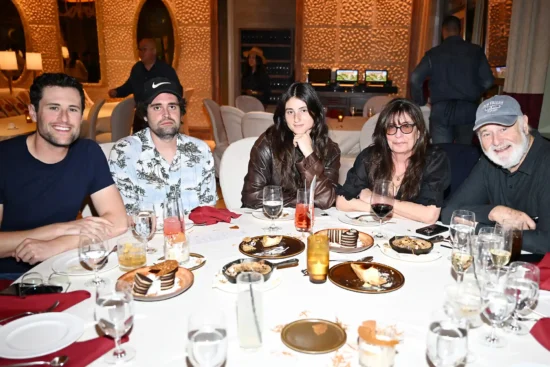
For much of his adult life, Reiner lived intermittently in the guesthouse on his parents’ $13.5 million Brentwood property, formerly owned by Henry Fonda, an Academy Award–winning actor and foundational figure in old Hollywood. Nick Reiner was unemployed and financially dependent on his parents. Despite mounting volatility, Rob and Michele Reiner reportedly resisted pursuing involuntary psychiatric commitment.
According to friends, Rob Reiner said he could not bear to watch police restrain his son and place him in a psychiatric ward. In multiple interviews over the years, Reiner openly acknowledged that “tough love” was not in his nature. Instead, Reiner’s parents attempted alternative interventions. Rob Reiner arranged an internship for his son with the production team behind Family Guy, personally driving him to and from the job each day. During this period, Reiner attempted to pursue stand-up comedy, performing at established Los Angeles clubs including the Comedy Store. No recordings of these performances have surfaced, and the effort quietly ended.
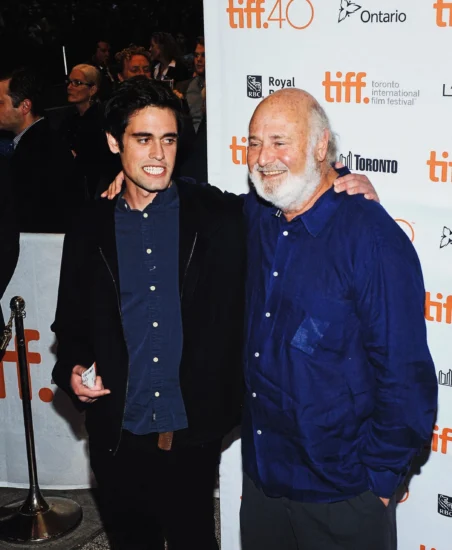
Throughout Reiner’s life, his parents repeatedly intervened to shield him from consequences and ensure an endless supply of second chances. At one rehab facility, Reiner threw a rock through a stained-glass chapel window after staff refused to provide a medication he could abuse. A former employee said he was nearly expelled but was allowed to remain after his parents shelled out more than $20,000 to cover the damage. During another relapse, Reiner said he stayed awake for days on stimulants and destroyed the interior of the guesthouse, punching a television and a lamp. He later suffered what he cocaine-related heart attack while being transported to yet another treatment program.
Where Things Stand
Since his arrest, Reiner has been held at the Twin Towers Correctional Facility in downtown Los Angeles, housed in Tower 2’s high-observation mental health unit. According to a sheriff’s department source cited by People, he is confined to a 7-by-10-foot cell under constant fluorescent lighting and remains under close medical monitoring. Although he was initially placed on suicide watch and required to wear a suicide-prevention smock, that designation has since been lifted.
Multiple sources have described Reiner as presenting in a “child-like” psychological state while incarcerated. One source familiar with his condition stated that while he appears to understand what he did, he is unable to process where he is or the consequences of his actions. Others have described him as detached from reality and emotionally disorganized.
Surviving members of the Reiner family have since cut off Nick Reiner emotionally and financially. His high-profile defense attorney withdrew from the case, and he is now represented by a public defender. Family sources say the decision to stop funding his defense was driven by his erratic behavior and refusal to cooperate, rather than a lack of concern for the outcome. The family has reportedly prepared to oppose the death penalty should it be sought, stating that execution would not undo what happened.
References
- Nick Reiner May Have Been on Meth When He Killed His Parents — TMZ, January 17, 2026
- Inside Nick Reiner’s Life Behind Bars (Exclusive) — People, publication date not specified
- Nick Reiner Murder Case: Mental Competency Questioned in Fox Nation Investigation — Fox News, publication date not specified
- Nick Reiner’s Former Roommate Claims Accused Killer Hated His Parents, Especially His Father — National Enquirer, publication date not specified
- Nick Reiner’s Family ‘Terrified’ That More Private Medical History Could Be Exposed — Yahoo Entertainment, publication date not specified
- How Friends Describe Nick Reiner, the Son of Rob and Michele — The Washington Post, January 24, 2026 (archived)
- Rob Reiner’s ‘Entitled’ Son Nick Wanted a Life That Didn’t Exist, Says Source — People, publication date not specified
- Nick Reiner Was Placed Under a Mental Health Conservatorship Five Years Before Parents’ Killing — People, publication date not specified
- Rob Reiner’s Son and the Beliefs Surrounding His Case — Yahoo Entertainment, publication date not specified
- NBC News Reporting Referencing Rob and Michele Reiner — NBC News, publication date not specified
- Killing Your Parents: Rob Reiner and His Son — Times of Israel (Blog), publication date not specified
- Remembering Rob Reiner — Criterion Collection, publication date not specified
- Rob Reiner (1947–2025): The Life and Career — Stephen Silver (Substack), publication date not specified
- The Nepo Baby Who Made Good: Rob Reiner on Trump, Family, and His Movies — The Guardian, February 29, 2024